AI Weekly Recap, Grok Bot, ChatGPT and Claude Shifts
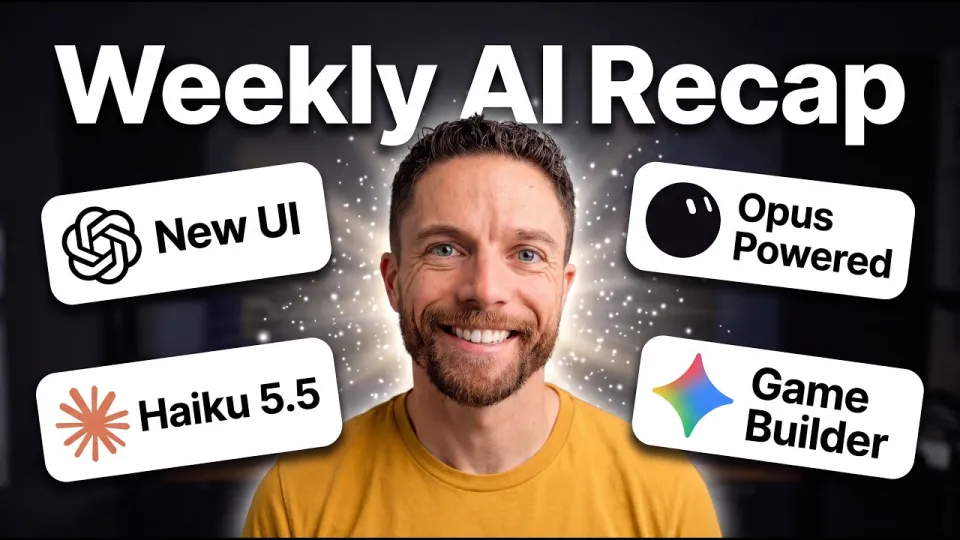
Video: Weekly AI Recap: GrokBot Just Did the Unthinkable, ChatGPT Looks Completely Different & More!
You can order the same kind of articles for your own video to boost it on YouTube and Google. Just message the Telegram bot @sat_sit_bot. Articles with your video embedded are written and posted by the bot itself — on popular topical sites (no ads). Your first 50 articles are free.
· based on the channel Paul J Lipsky
The AI news of the week centers on a single question: how much of your work can one assistant do end to end? Grok Bot is being wired to call Claude, Midjourney and Suno, ChatGPT has a redesigned Intelligent UI, and Claude Cowork has moved to the cloud. You can explore the sponsor of this week's recap, Okou, via the Okou launch page.
What Grok Bot's multi-model plan actually changes
Grok Bot is moving from a single-model chatbot toward a router that hands tasks to specialist tools, and the reported targets are Claude for reasoning and writing, Midjourney for images and Suno for audio. The practical effect is that a user describes an outcome rather than picking a model, and the bot decides which engine to invoke. That is a meaningful shift in how assistants are sold: the value moves from the underlying weights to the orchestration layer, the memory of your project and the ability to chain steps without copy-pasting between tabs.
A viewer of the recap described handing Grok Bot a link to a Google Photos folder full of business videos, giving it instructions for a social media clip, receiving a voice script, recording it, and getting back a result better than a paid contractor's. Treat that as an anecdote, not a benchmark, but it illustrates the workflow the product is aiming at: folder in, script out, asset assembled. The same logic explains why the assistant's memory and file access matter more than raw model choice.
Two caveats are worth keeping in mind. First, routing across third-party models raises questions about which provider's safety rules and data policies apply to a given request. Second, chained tools multiply failure points, so output quality depends on how well the bot verifies intermediate steps. If you are testing this, start with a low-stakes project and check each handoff.
ChatGPT's Intelligent UI, explained without the hype
ChatGPT's new Intelligent UI is a redesign of the interface rather than a new model, and the goal is to make the assistant adapt its layout to the task at hand. In practice that means the chat surface can present different controls, panels or suggestions depending on whether you are writing, analyzing a file or asking for an image. For everyday users the change is mostly about discoverability: features that used to hide behind menus become visible at the moment they are relevant.
Interface changes tend to produce two reactions, and both are reasonable. Some users find the new layout faster because the next action is suggested rather than hunted for. Others find it disorienting when familiar buttons move, especially in team settings where muscle memory and shared screenshots matter. A sensible approach is to spend one session deliberately exploring the new layout, then decide which features you actually use and ignore the rest.
Claude Cowork goes cloud-first and Haiku 5.5 arrives
Anthropic's two updates this week point in the same direction: put Claude where the work already lives. Claude Cowork moving to the cloud means collaborative sessions no longer depend on one person's machine being awake, which matters for teams that want a shared workspace rather than a local chat window. Claude Haiku 5.5 refreshes the small, fast tier of the model line, the one typically used for high-volume tasks where latency and cost matter more than deep reasoning.
The combination is telling. A cloud workspace needs cheap, quick models for the many small steps, drafting, summarizing, routing and checking, and a stronger model for the few steps that need judgment. If you run a team, the question to ask is not which model is best but which tasks deserve the expensive one.
Google: Gemini plans, Playground and Nano Banana 2.1
Google's week was about packaging as much as capability. Gemini plan changes reshuffle what each subscription tier includes, and one viewer noted that the AI Plus plan bundles a Google Pro model with 2TB of storage, a detail worth checking against the current plan page before you upgrade or downgrade. Google Playground also got hands-on testing in the recap, as a space for trying prompts and model behavior before committing them to a product.
On the image side, Nano Banana 2.1 continues the rapid iteration of Google's image generation line, with the version number doing most of the talking: expect incremental quality and editing improvements rather than a new category of tool. The useful habit here is to re-test your standard prompts after each update, because model behavior drifts and yesterday's reliable prompt can quietly change its output.
Common questions from people following this space
The most frequent confusion is about identity: one viewer deleted a "Primary Grok Bot" that appeared without explanation, assuming another bot had gone rogue, and then could not restore it. The lesson is general, not specific to Grok, when a new agent or bot shows up in your account, read the description before deleting it, because default agents are often the ones that hold context and permissions.
A second recurring request is guidance for non-technical users, particularly around Claude Code. The gap is real: most documentation assumes a terminal and a mental model of files and repositories. A useful starting point is to treat the tool as a careful assistant that reads your project folder and proposes edits you approve, rather than as something that runs on its own.
A third theme is keeping up without drowning. Weekly roundups exist because the release cadence outpaces most people's attention, and the honest advice is to pick two or three tools you actually use and follow those closely, skimming the rest for structural shifts like multi-model routing or cloud workspaces.
What this week signals for the rest of the year
Three patterns stand out. Assistants are becoming orchestrators that call other models and tools, which makes integration and memory the battleground rather than raw benchmark scores. Collaboration is moving to the cloud, so shared AI workspaces start to resemble shared documents. And subscription packaging is being renegotiated in public, with storage, model access and usage limits bundled in ways that reward reading the fine print.
Paul J Lipsky's weekly recap is a useful way to track these threads, because it groups the news by company and tests the products rather than repeating launch posts. If you want to try the sponsor of this week's episode, you can sign up for Okou through the launch link and use promo code KJZN8RVG for 20% off one month of either the Pro or Team plan, capped at 100 redemptions.
Bottom line
The week's AI news is less about one breakthrough model and more about plumbing: Grok Bot routing work to Claude, Midjourney and Suno, ChatGPT reshaping its interface, Claude Cowork moving into the cloud and Google reshuffling its plans. For users, the practical takeaway is to audit which tools you actually rely on, re-test your prompts after updates and read plan details before paying. The recap by Paul J Lipsky is a solid starting point for that audit, and the sponsor link above is the fastest way to try one of the tools featured.
Key takeaways
- Grok Bot is being positioned to call external tools including Claude, Midjourney and Suno from a single assistant interface.
- ChatGPT ships a redesigned "Intelligent UI" that changes how the chat surface looks and behaves.
- Anthropic moves Claude Cowork into the cloud and refreshes the Claude model line with Haiku 5.5.
- Google adjusts Gemini plan tiers, tests Google Playground and updates the image model line to Nano Banana 2.1.
- Okou is the sponsor of the weekly recap and offers 20% off one month of Pro or Team with code KJZN8RVG, limited to 100 redemptions.
Questions & answers
What is Grok Bot's plan to use Claude, Midjourney and Suno?
Grok Bot is being positioned as an orchestrator that routes tasks to specialist models: Claude for reasoning and writing, Midjourney for images and Suno for audio. Instead of choosing a model yourself, you describe the outcome and the bot picks the engine. The practical benefit is fewer copy-paste steps between tools; the practical risk is that each third-party handoff adds a policy and reliability question.
Is ChatGPT's Intelligent UI a new model?
No. The Intelligent UI is a redesign of the ChatGPT interface, not a new underlying model. It adapts the layout and visible controls to the task, so features appear when they are relevant rather than sitting in menus. Expect a short adjustment period if you rely on muscle memory.
What changed with Claude Cowork and Claude Haiku 5.5?
Claude Cowork moved to the cloud, so collaborative sessions no longer depend on one person's machine staying online. Claude Haiku 5.5 refreshes the fast, low-cost tier of the model line, which suits high-volume drafting, summarizing and routing. Together they point to shared cloud workspaces backed by cheap models for small steps and stronger models for judgment calls.
Why did a new bot appear in my account without warning?
Default agents are sometimes added to accounts during rollouts, and viewers have reported deleting one before realizing what it was. Before removing an unfamiliar bot, open its description and check whether it holds context or permissions. If you already deleted it, look for a restore option in account settings or contact support.
Source: Weekly AI Recap: GrokBot Just Did the Unthinkable, ChatGPT Looks Completely Different & More! · Markdown version